

 Location:
From March 17 to 21, 2026, Dr. Ye Juyan, Deputy Head for Teaching&Learning and International Engagement at CTER-BNU, traveled to Valencia, Spain, to attend the first in-person symposium of the “Simulation in Teacher Education” (SITE) International Research Network (IRN), an initiative under the World Education Research Association (WERA).
About the SITE IRN
Launched in January 2025 by a group of international scholars, the SITE IRN was formally approved by WERA in June 2025. Since its inception, the network has held bimonthly online seminars. The Valencia meeting was hosted by Professor Maria Laura Angelini, co-founder of the network and Director of the Master’s Program in Teacher Education at Universidad Católica de Valencia. The symposium brought together researchers and practitioners from China, the United States, Germany, the Netherlands, Romania, Israel, and Spain, all working at the intersection of teacher education and simulation-based learning. The gathering aimed to deepen theoretical dialogue, share practical insights, and chart a collaborative path forward.
Over three days, participants engaged with key questions, including:
The theoretical foundations and practical value of simulation-based learning in teacher education;
Core concepts, terminology, and a unified classification system for simulation-based learning;
Locally grounded approaches to simulation-based learning in different national contexts; and
How simulation-based learning can help preserve cultural heritage while fostering global competence.
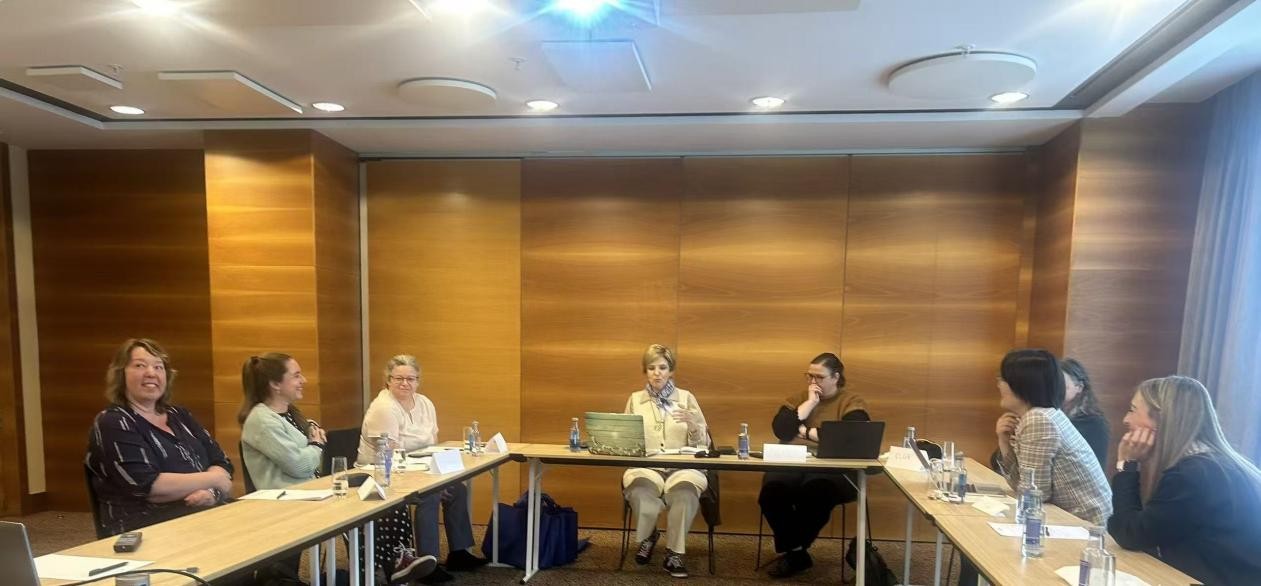
As a core member of the SITE IRN, Dr. Ye delivered a presentation titled “Bridging Cultures, Shaping Minds: Innovating Teacher Education through International Online Simulation-Based Learning.” She presented a cross-national online simulation project developed jointly by CTER and the team led by Dr. Orna Levin in Israel. The project uses authentic educational scenarios—such as teacher-parent communication—to help master’s-level pre-service teachers develop intercultural understanding, responsiveness to student diversity, and global competence. Preliminary findings show that the “third space” created by cross-national simulations significantly enhances pre-service teachers’ professional identity and cultural sensitivity. Dr. Ye also offered reflections on setting learning objectives, ensuring cultural appropriateness in simulation scenarios, and expanding international collaboration. Her talk generated lively discussion on the feasibility and value of scaling up cross-national online simulation learning.
AI as a New Frontier
Artificial intelligence emerged as a central theme. Scholars explored how AI can be integrated into simulation-based learning, envisioning a near future where AI agents work alongside pre-service teachers from multiple countries. These agents could provide real-time feedback, adapt task difficulty dynamically, and capture fine-grained learning process data—opening new avenues for simulation-based learning and driving innovation in the digital transformation of teacher education.
Site Visit and Collaborative Next Steps
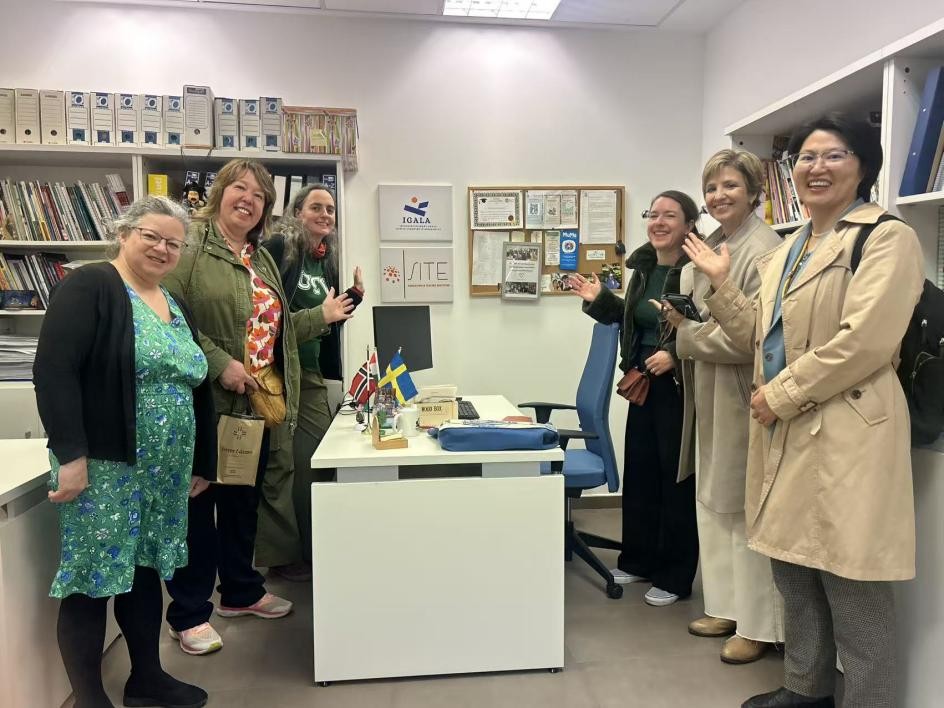
During the symposium, participants visited the Simulation Learning Center at Universidad Católica de Valencia, where they observed its operational models and technical infrastructure for teacher education. They also experienced a cross-national virtual simulation classroom involving universities in Romania and Hungary, witnessing first-hand how pre-service teachers from different countries learn together through simulation.
Building on these exchanges, the network reached initial consensus on several collaborative activities: joint publications, international grant proposals, and thematic sessions at global conferences. The symposium also marked a milestone in the network’s identity building, with the launch of the SITE IRN’s official logo, hashtags, and commemorative tote bags.
Although some members could not attend in person due to ongoing conflict in their regions, a well-organized hybrid format ensured meaningful participation and sustained dialogue across diverse perspectives.
Global Competence in Practice
Participants agreed that the symposium did more than advance scholarly consensus. It also deepened their understanding of “global competence” through cross-cultural practice. In today’s world, teachers are not only transmitters of knowledge—they are bridges across cultures and practitioners of inclusive education.
Looking Ahead
The Valencia symposium has created a broader platform for pre-service teachers from CTER to engage in joint simulation learning with peers around the world. More importantly, it marks a concrete step forward in international collaboration to reshape teacher education through simulation-based learning in the age of artificial intelligence. The Center for Teacher Education Research at Beijing Normal University will continue to support and lead high-impact international partnerships, contributing insights and models to the development of a teacher education system that is both globally competitive and grounded in Chinese characteristics.


