 Location:
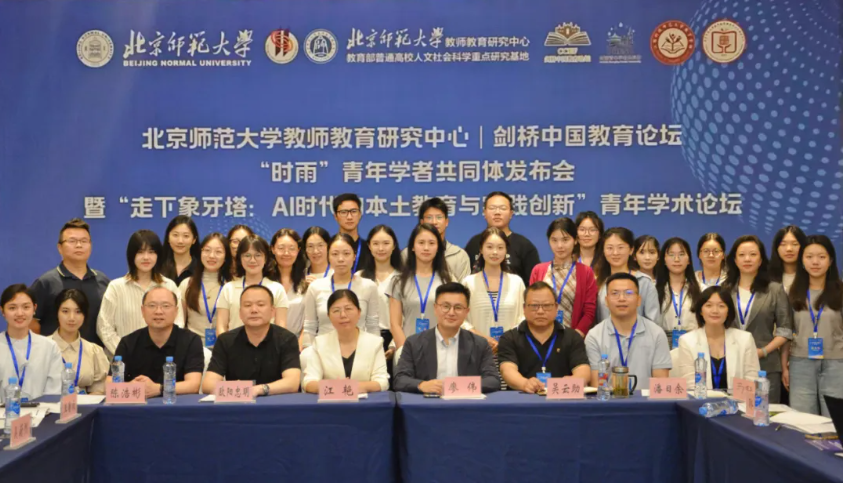
Hosted jointly by the Center for Teacher Education Research (CTER) — a Key Research Base of Humanities and Social Sciences under the Ministry of Education affiliated with the Institute of Teacher Education, Faculty of Education, Beijing Normal University — and the Cambridge China Education Forum, and co-organized by the Jiangxi Branch of CTER and the Faculty of Education, Jiangxi Science and Technology Normal University, the two-day event was held in Nanchang, Jiangxi Province from June 13 to 14, 2026. Scholars and young researchers from universities and research institutions at home and abroad gathered to exchange insights on educational transformation in the AI age, local educational practical innovation, and the development of youth academic communities.
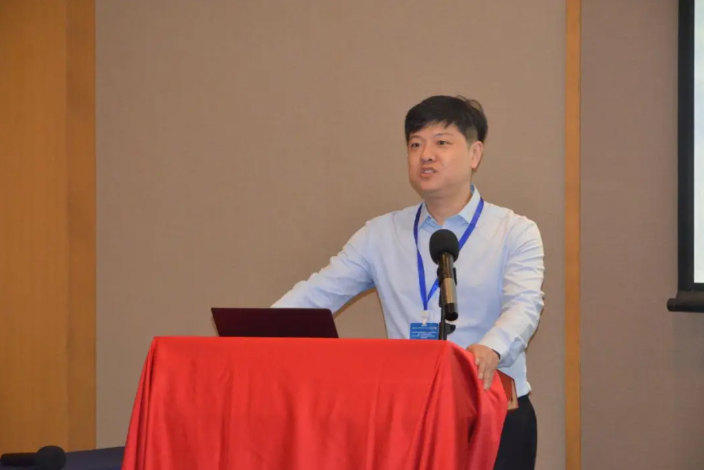
Professor Ouyang Zhongming, Dean of the Faculty of Education at Jiangxi Science and Technology Normal University, delivered an opening address. He noted that the university features teacher education as its core strength and vocational teacher training as its distinctive specialty. He encouraged young researchers to uphold educational missions, embrace technological shifts, and promote interdisciplinary dialogue, adding that constructing an indigenous knowledge system for Chinese education is a critical research priority. He advised young scholars to conduct field-based research rooted in real educational challenges to explore future-oriented educational reform pathways.
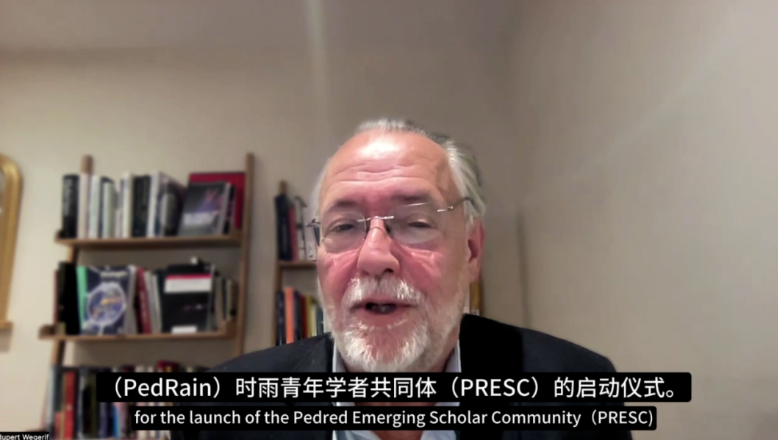
Professor Rupert Wegerif, Fellow of Hughes Hall, University of Cambridge and advisor to the Cambridge China Education Forum, introduced the origin and evolution of the forum and expressed high expectations for PedRain Emerging Scholar Community (PRESC), co-founded by CTER and the forum. He called for cross-generational and cross-cultural academic dialogue to foster original ideas and sustainable academic culture.
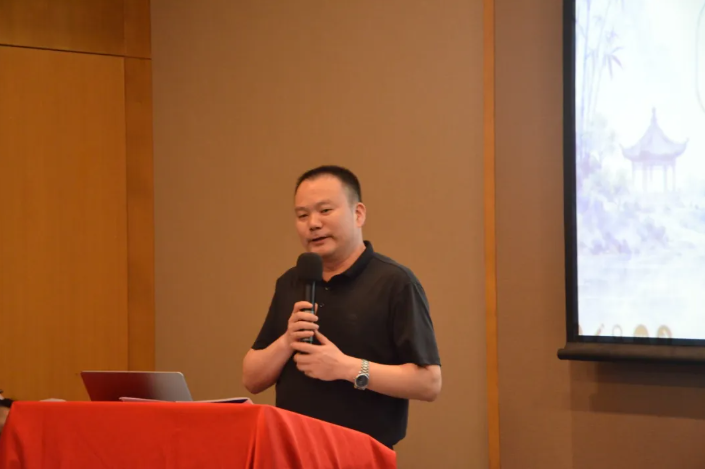
Associate Professor Liao Wei, Vice Director of the Institute of Teacher Education, Faculty of Education, BNU, extended congratulations on the establishment of PRESC. He analyzed the community from four dimensions: identity positioning, ideal pursuit, practical challenges, and institutional support, urging young scholars to maintain vitality, balance ideals with action, and confront practical difficulties. He hoped PRESC would build a long-term operational mechanism to create a high-quality exchange platform for young global researchers. The opening ceremony was chaired by Professor Jiang Yan, Party Secretary of the Faculty of Education, Jiangxi Science and Technology Normal University.
During the community launch session, Wang Xingzhou, a PhD candidate at CTER, reviewed the center’s journey to build an internationally leading teacher education institute, highlighting its achievements in interdisciplinary integration, data platform construction, and the “1+N” teacher education think tank system. Lou Feifan, PhD student at the University of Cambridge and Chair of the Cambridge China Education Forum, presented the forum’s development history, while Dr. Wu Yutong, research assistant at CTER, explained the founding purpose, organizational structure and core philosophy of PedRain Emerging Scholar Community (PRESC). The name PedRain derives from the concept of timely rain recorded in Mencius·Jinxin Shang, which symbolizes young scholars nourishing educational practice just as spring rain nourishes all living things. PRESC aims to build academic exchange platforms, collaborative workshops for educational research, and knowledge transformation networks, encouraging educational research to engage with real educational contexts and generate actionable practical strategies.
A series of young researcher presentations followed the launch ceremony, focusing on AI-enabled educational practice and localized innovation. Rong Qing, a master’s student at CTER, delivered a qualitative analysis based on symbolic interactionism on how mentor-mentee interactions shape student teachers’ on-site learning. Cao Nan from the University of Cambridge shared research on rural education innovation, outlining the full pipeline from conceptual design to practical prototypes. Mao Huimin, master’s student at Jiangxi Science and Technology Normal University, explored learning strategies for senior university teachers oriented toward successful aging at work. Professor Cheng Jin from the School of Educational Sciences, Anqing Normal University, discussed how generative AI supports the development of teachers’ AITPACK from a human-AI collaboration perspective, covering its applications in instructional design, content generation, assessment and teaching support, as well as its impacts on teacher professional development.
Two roundtable discussions were arranged to advance in-depth exchanges: “Restructuring Teachers’ Roles and Upholding Humanistic Values amid Technological Transformation” and “Effective Teaching Has No Fixed Formula: Can China’s Traditional Teaching Theory Contribute to Global Educational Theory?” Participants discussed educational subjectivity in the AI era, the reconstruction of teacher roles, value orientations of educational technology, and the global significance of China’s traditional teaching theories. Consensus emerged that artificial intelligence provides new tools and space for educational innovation, yet people, real classrooms and on-the-ground practice remain the core of educational reform. Educators should actively adopt technology while retaining human-centered educational values, maintaining a balance between instrumental rationality and humanistic care.
The forum featured keynote speeches delivered by a panel of distinguished experts, including Professor Song Huan, Dean of the Faculty of Education and Deputy Director of CTER, Professor Ouyang Zhongming, Associate Professor Liu Yuanjie, Vice Dean of the Faculty of Education at Guangxi Normal University, Professor Pan Xinmin, Dean of the School of Teacher Education at Hebei Normal University, Professor Li Hongxiu from the Faculty of Education at Tianjin Normal University, Associate Professor Liao Wei, and Dr. Ji Ying from Hughes Hall, University of Cambridge. Their presentations covered the construction of evidence-based education in the digital intelligence era, learning transformation driven by artificial intelligence, cultivation of educator spirit, reconstruction of educational civilization, core values of experiential teaching, indigenous self-study research methodologies, and interdisciplinary core competency development.
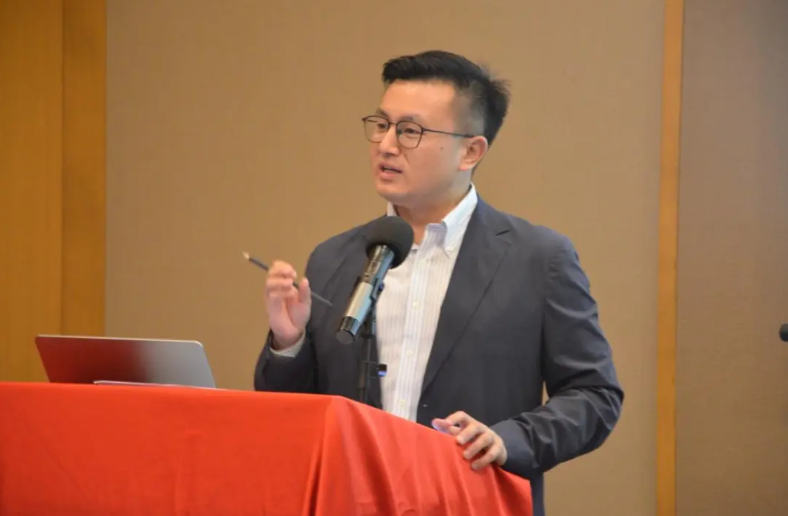
Professor Song Huan delivered a keynote speech titled Constructing Evidence-Based Education and Transforming Research Paradigms in the Digital Intelligence Era. He examined the relationship between educational theory and practice, arguing that Chinese pedagogy requires solid theoretical foundations alongside empirical fieldwork, integrating empirical research, speculative analysis and practical experience to form indigenous educational knowledge with strong explanatory power and global influence. He noted that AI reshapes sources of research evidence and research methodologies, opening new possibilities for text analysis, subjective measurement, causal inference and qualitative research, while reminding researchers to guard against risks of data authenticity, epistemological bias and diminished human subjectivity brought by AI-generated content. He stressed that educational research should not blindly pursue technical tools; instead, researchers need consistent critical reflection, independent judgment and methodological awareness, advancing evidence-based education through high-quality local educational data, human-centered ethical standards and rigorous critical methodologies.
Associate Professor Liao Wei presented the speech Self-Cultivation to Empower Others: Constructing an Indigenous Methodology of Self-Study Research. He introduced self-study research, a growing methodology in teacher education, clarifying that it goes beyond personal experience analysis: researchers reflect on their own actions, perspectives and identity shifts to address public issues in educational practice and disciplinary development, transcending individual self-interest. Addressing common obstacles faced by young scholars including evaluation pressure, separation of teaching and research, and self-obscuration, he proposed localized adaptive transformation of international self-study research frameworks. Drawing on traditional Chinese philosophical ideas including self-cultivation to bring peace to others, investigating things to attain knowledge, the unity of knowledge and action, and applying scholarship to real-world challenges, he elaborated the connotation of “self-cultivation to empower others”. He advocated that researchers engage in consistent self-reflection, journaling and self-examination within authentic educational practice, linking personal moral refinement to teaching improvement, social contribution and the development of a strong education system in China.
Professor Song Huan delivered the closing summary speech, congratulating all participants on the forum’s success and commending the active contributions of young scholars. He proposed that PedRain Emerging Scholar Community (PRESC) should prioritize cross-cultural exchange and focus on Chinese educational realities, encouraging young researchers to conduct field-based studies across China and present authentic, diverse local educational landscapes to global academia. He expressed expectations that young scholars would achieve breakthroughs in research paradigms, shifting from primarily absorbing Western theories to developing indigenous research methodologies for Chinese education, and viewed differences between Chinese and Western academic systems as valuable sources of research awareness, methodological innovation and theoretical creation.